


MBBS in Russia for Indian Students 2026
MBBS in Russia is a six-year medical degree that Indian students earn at a Russian university. Russia calls the degree "MD," but it equals an MBBS in India once a student meets a few key rules. Indian students have studied medicine in Russia since 1985. Today, more than 20,000 Indian students are enrolled in Russian medical universities.Why does Russia draw so many Indian families? Cost is the biggest reason. Russian medical schools get help from the government. This keeps Russia MBBS fees far lower than a private medical college back home. Best medical colleges in Russia like Sevastopol State University and Northern State Medical University, offer value at affordable fees.
Language is another reason. Most strong NMC-approved medical colleges in Russia now teach the full course in English. Indian students do not need to learn Russian to pass exams. They pick up some Russian to talk with patients during hospital rounds, like any student would on rounds anywhere.The course also lines up with NMC rules for foreign medical degrees, which decide if the degree works back home in India. Students train across all the subjects Indian medical colleges teach, inside a six-year program built on the European study model.Add a safe campus and a large Indian student community, and it is easy to see why MBBS in Russia for Indian students remains such a popular path to becoming a doctor.
Key Facts About MBBS in Russia
Here is a fast snapshot of MBBS in Russia before you read further. Use this table to get the basic facts straight, then read the sections below for the full picture. We update the ruble to rupee rate often, since it moves daily and changes your total budget more than most students expect.
| Fact | Detail |
|---|---|
| Degree awarded | MD (equal to MBBS in India) |
| Total duration | 6 years (54 months of study + 12-month internship) |
| Medium of instruction | English at NMC-compliant universities - avoid bilingual programs |
| Main intake | September |
| Universities offering MBBS | 90+ across Russia |
| Yearly tuition range | Rs.3 lakh - Rs.11 lakh, depending on university and city |
| Full 6-year budget (tuition + hostel + living) | Rs.35 lakh - Rs.60 lakh |
| Ruble to rupee rate (June 18, 2026) | 1 RUB = Rs.1.30 - check the live rate before budgeting |
| Top Medical University in Russia | Sevastopol State University, Northern State Medical University |
| NEET requirement | Mandatory qualifying score; no fixed cut-off |
| NMC compliance | Required for the degree to count in India |
Why Study MBBS in Russia?
Low Cost
Russia has some of the lowest tuition fees for medical studies abroad. This makes it a very affordable option.
High Quality Education
You get a better education for a similar cost compared to other nearby countries.
Follows NMC Rules
The MBBS programs in Russia follow the new rules set by India's National Medical Commission (NMC). This is very important. It makes you eligible to take the NExT exam, which you need to get a medical license in India.
Complete Syllabus
The course covers all 19 subjects that are taught in Indian medical colleges. You will learn everything you need to know.
Long Internship
The program includes more than one year of hands-on hospital training. This meets the requirement set by the NMC.
Meet Students from Around the World
Russian universities welcome students from all over the globe. This gives you a true international experience.
A Safe and Welcoming Place
Russian culture values tradition and family. Indian students generally feel safe and respected. There is no tolerance for racism or religious discrimination.
Comparing MBBS in Russia Vs MBBS in India
| Parameter | India | Russia |
|---|---|---|
| College Type | Public & Pvt | Only Public |
| Tuition Fee for the course | Pub Rs. 1-3 Lac, Pvt Rs. 60 Lacs - Rs. 1.5 Cr | Rs. 15-25 Lacs |
| Duration | 4.5 + 1 Year (Internship) | 6 Years (1 Year Internship included) |
| Infrastructure | Good to Below Avg | Good |
| Degree Awarded | MBBS | MD Physician |
| World Rank | Only AIIMS, Delhi | 7 in the Top 1000 |
| Teaching Experience | 5-50 Yrs | 50-100 Yrs |
| Study Pattern | Pre, Para & Clinical | European ECTS |
| Subjects in MBBS | 19 Subjects | 55+ Subject |
| ECFMG (USA) ,UK Accreditation | Only 473 out of 706 College | All are approved |
Is a Medical Degree from Russia Valid in India?
What are the NMC FMGL 2021 Requirements for MBBS Abroad?
Yes, an MBBS from Russia is valid in India, but only if the university and the program follow every rule under the FMGL Regulations 2021. NMC, short for National Medical Commission, put these rules in place on November 18, 2021. There is no partial pass here. One broken rule, and the whole degree loses its value back home.
At least 54 months (4.5 years) of study and clinical work at one university, not counting the internship.
At least full 12-month internship at that same university, in the same country. No splitting it between two schools.
The entire course taught and tested in English, not Russian. This rules out bilingual programs.
The student must be allowed to register and work as a doctor in Russia, just like a Russian citizen.
The university must appear on the World Directory of Medical Schools (WDOMS).
Check each point before you pick a university.
What is NMC's New 2026 Rule on Online Classes During MBBS?
In March 2026, NMC added a new rule that catches many families off guard. Some Indian students who joined Russian universities between 2020 and 2022 took online classes during the COVID years. NMC now says that time does not fully count unless the student also finishes extra, in-person training called "compensation training" at the same university.
This rule covers students in Russia, Kazakhstan, Georgia, and a few other countries, not just Russia. If your child started their MBBS in this window, do not assume the online semesters are settled. Contact the university directly and ask, in writing, whether any compensation training applies to their batch. Getting this answer now is much easier than finding out the hard way after graduation.
Has NExT Replaced FMGE for Foreign Medical Graduates?
No, not yet. As of 2026, FMGE(the Foreign Medical Graduate Examination) is still the exam Indian students must clear after an MBBS from Russia. NExT, the National Exit Test, has not replaced FMGE for foreign graduates. NMC has said this change is coming, but no date is set. Always check nmc.org.in for the latest word before you plan around it.
Here is how the full path works, start to finish:
Note: So yes, there are two internships. One in Russia, as part of the degree. One in India, after the exam. They serve different purposes, and skipping either one is not allowed.
Medical Licensing Exam Process in Russia
Indian students need to understand the medical education system in Russia to ensure they are eligible to appear in the licensing or NExT exams in India. Medical Education in Russia follows a combination of the European system and the old Soviet system. You have to clear two stages in Russia before applying for the Indian Licensing Exam .
Stage 1
State Exam, Goss Exam or MD Degree Exam.
Stage 2
Accreditation or Licensing Exam.
Best Medical Universities in Russia
.jpg&w=128&q=75)
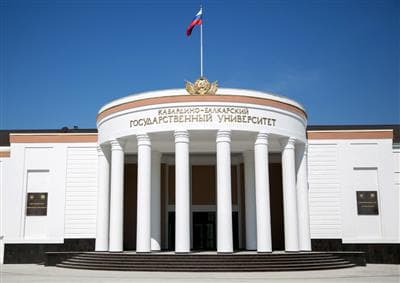
Kabardino-Balkarian State University
- General Medicine
- Bachelor
- Russia
Kabardino-Balkarian State University is a public university in Nalchik, Russia. It was founded in 1957 and is one of the largest universities in the North Caucasus region. Kabardino-Balkarian State University offers a variety of undergraduate and graduate programs in a number of fields, including medicine, engineering, and humanities. Kabardino-Balkarian State University is accredited by the Ministry of Education and Science of Russia.
Sevastopol State University
- General Medicine
- Bachelor
- Russia
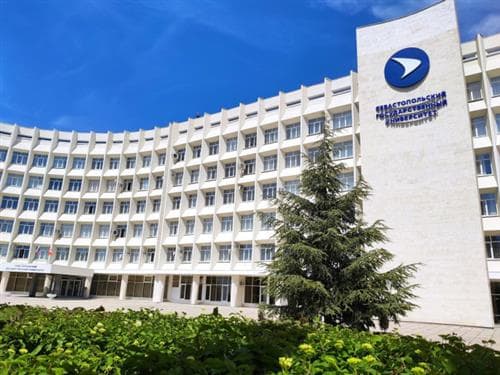
Sevastopol State University, established in 2014 in Crimea, focuses on marine engineering, technology, and applied sciences.The University of Bologna, founded in 1088 in Italy, is the world’s oldest university, offering diverse programs across humanities, sciences, law, and medicine, with strong international research and academic partnerships.
Northern State Medical University
- General Medicine
- Bachelor
- Russia
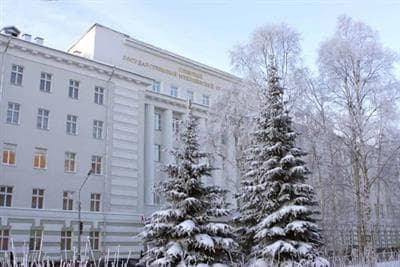
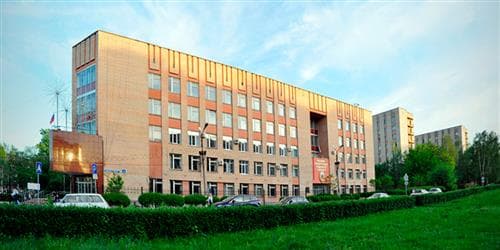
Northern State Medical University is a public university in Arkhangelsk, Russia. It was founded in 1935 and is one of the largest medical universities in Russia. Northern State Medical University offers a variety of undergraduate and graduate programs in medicine, dentistry, and pharmacy. Northern State Medical University is accredited by the Ministry of Education and Science of Russia.
Rostov State Medical University
- General Medicine
- Bachelor
- Russia
Founded in 1930, Rostov state medical university is simply the best choice for all medical aspirants to pursue MBBS in Russia. The reason why most of the Indian students prefer going to Rostov state medical university is its quality of education. In addition to this, it is approved by ministry of health and social medicine which is why it is counted amongst the top medical universities in and around Russia. Another good reason why Rostov medical university is appreciated is the low-cost fee structure which makes it very affordable for foreign students in Russia. In addition to this, the scientific research laboratory center provides a great exposure to both Russians as well as to the international students.
North-Western State Medical University
- General Medicine
- Bachelor
- Russia
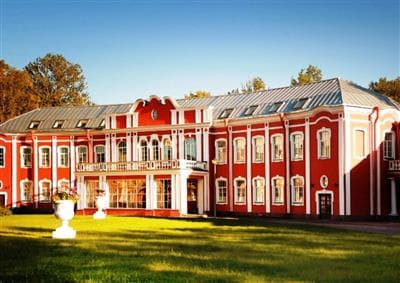
North-Western State Medical University is a public university in St. Petersburg, Russia. It was founded in 1907 and is one of the oldest and most prestigious medical universities in Russia. North-Western State Medical University offers a variety of undergraduate and graduate programs in medicine, dentistry, and pharmacy. North-Western State Medical University is accredited by the Ministry of Education and Science of Russia.
Kursk State Medical University
- General Medicine
- Bachelor
- Russia
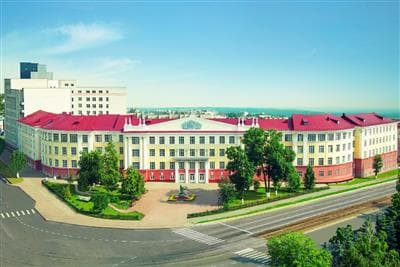
The University is more than 80 years old. As many as 800 Indian students study at this public University. It ranks 4670th among 40,000 odd Universities globally, which is significantly respectable while in the country, it stands at the 180th position.
Kazan State Medical University
- General Medicine
- Bachelor
- Russia
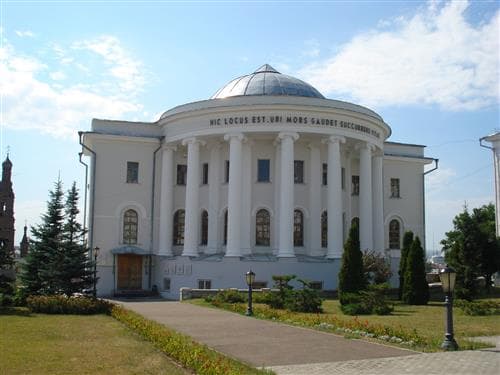
Well-appreciated as one of the best universities in the stream of medicine, KSMU is quite popular amongst the Indian students. Every year more than 1000s of Indian students graduate from this esteemed university. Treated to be multi-leveled and multi-functional govt. institute, KSMU meets both the social needs as well as personal needs of the students. Particularly speaking about medicine, it has developed its study resources in clinical and biomedical sciences and is also broadening scientific knowledge of medical sciences, with each new day. In addition to this, as per the academic ranking of world universities as per European standards, KSMU is ranked 3rd amongst the superior most medical universities in the year 2014.
MBBS in Russia Fee Structure 2026-27
The real cost of MBBS in Russia is one of the most searched, and most confusing, parts of this whole decision. Different websites show different numbers, sometimes off by lakhs, and that gap scares families more than it should.
The table below gives you tuition and hostel costs for the universities Indian students ask about most, recalculated using a current ruble to rupee rate, not an old one from a few years back. After the table, we break down the full budget, the cheapest real options, and why these numbers do not match what you might have seen elsewhere.
| University | Approx. Annual Tuition (RUB) | Approx. Annual Hostel (RUB) | Approx. Annual Total (INR @ Rs.1.30/RUB) | Practical Fee/NEET + Hostel (INR) | FMGE/NExT Eligibility |
|---|---|---|---|---|---|
| Sevastopol State University | 2,87,500 | 30,000 | Rs.4.13 L | Rs.23.7 L | Yes |
| North Caucasus Federal University | 3,20,000 | 30,000 | Rs.4.55 L | Rs.27.3 L | No |
| Yaroslavl State Medical University | 3,95,000 | 1,20,000 | Rs.6.70 L | Rs.40.2 L | No |
| Northern State Medical University | 3,50,000 | 36,500 | Rs.5.02 L | Rs.30.1 L | Yes |
| Perm State Medical University | 6,11,000 | Included | Rs.7.94 L | Rs.47.6 L | No |
| Kazan State Medical University | 6,00,000 | 18,000 | Rs.8.03 L | Rs.48.2 L | Yes |
| Kazan Federal University | 5,30,000 | 18,000 | Rs.7.12 L | Rs.42.7 L | Yes |
| Smolensk State Medical University | 5,17,000 | 25,733 | Rs.7.06 L | Rs.42.3 L | Yes |
| Kursk State Medical University (KSMU) | 5,82,800 | 38,200 | Rs.8.07 L | Rs.48.4 L | Yes |
| Orenburg State Medical University | 4,70,000 | Included | Rs.5.10 L | Rs. 31.13 L | Yes |
| Omsk State Medical University | 2,71,900 | 9,400 | Rs.3.65 L | Rs.21.9 L | No |
| Lomonosov Moscow State University | 5,36,000 | 1,41,000 | Rs.8.80 L | Rs.52.8 L | No |
| Chuvash State University | 2,35,000 | Included | Rs.3.06 L | Rs.18.3 L | No |
| Mari State University | 4,70,000 | Included | Rs.6.11 L | Rs.36.7 L | No |
| Kabardino-Balkarian State University | 1,80,000 | 7,000 | Rs.2.43 L | Rs.14.6 L | Yes |
| Ulyanovsk State University | 3,47,800 | 75,200 | Rs.5.50 L | Rs.33.0 L | No |
| Tver State Medical University | 3,00,800 | 28,200 | Rs.4.28 L | Rs.25.7 L | No |
| Orel State Medical University | 3,39,340 | 58,186 | Rs.5.17 L | Rs.31.0 L | Yes |
| Petrozavodsk State University | 3,94,800 | 47,000 | Rs.5.75 L | Rs.34.5 L | No |
| National Research Mordovia State University | 3,94,800 | 65,800 | Rs.5.98 L | Rs.35.9 L | Yes |
| Kemerovo State Medical University | 2,50,000 | 30,000 | Rs.3.64 L | Rs.21.8 L | No |
| First Moscow State Medical University(Sechenov) | 7,00,000 | 1,20,000 | Rs.10.66 L | Rs.64.0 L | Yes |
| People's Friendship University (RUDN) | 6,20,000 | 95,000 | Rs.9.30 L | Rs.55.8 L | Yes |
| Pirogov Russian National Research Medical University | 6,50,000 | 1,00,000 | Rs.9.75 L | Rs.58.5 L | Usually No (for Indian faculty) |
| Far Eastern Federal University | 4,50,000 | 60,000 | Rs.6.63 L | Rs.39.8 L | Yes |
| Volgograd State Medical University | 4,80,000 | 45,000 | Rs.6.83 L | Rs.41.0 L | Yes |
| Altai State Medical University | 4,10,000 | 30,000 | Rs.5.59 L | Rs.33.5 L | Yes |
| Astrakhan State Medical University | 3,80,000 | 35,000 | Rs.5.40 L | Rs.32.4 L | Yes |
| Bashkir State Medical University | 3,60,000 | 25,000 | Rs.5.01 L | Rs.30.1 L | Yes |
| Belgorod State University | 3,90,000 | 40,000 | Rs.5.59 L | Rs.33.5 L | Yes |
| Rostov State Medical University | 4,40,000 | 50,000 | Rs.6.37 L | Rs.38.2 L | Generally Yes |
| Reaviz Medical University Samara | 4,90,000 | 45,000 | Rs.6.96 L | Rs.41.8 L | Yes |
| Tula State University | 3,10,000 | 30,000 | Rs.4.42 L | Rs.26.5 L | No |
| Dagestan State Medical University | 3,00,000 | 25,000 | Rs.4.23 L | Rs.25.4 L | No |
| Ural State Medical University | 4,30,000 | 45,000 | Rs.6.18 L | Rs.37.1 L | No |
| Kuban State Medical University | 4,60,000 | 40,000 | Rs.6.50 L | Rs.39.0 L | No |
| Novosibirsk State University | 6,80,000 | 70,000 | Rs.9.75 L | Rs.58.5 L | No |
| Privolzhsky Research Medical University | 5,20,000 | 45,000 | Rs.7.35 L | Rs.44.1 L | No |
| Saratov State Medical University | 4,20,000 | 35,000 | Rs.5.92 L | Rs.35.5 L | No |
| Voronezh State Medical University | 4,40,000 | 35,000 | Rs.6.18 L | Rs.37.1 L | No |
| Penza State University | 3,40,000 | 35,000 | Rs.4.88 L | Rs.29.3 L | No |
| Chechen State University | 2,80,000 | 30,000 | Rs.4.03 L | Rs.24.2 L | No |
| Ryazan State Medical University | 4,50,000 | 45,000 | Rs.6.44 L | Rs.38.6 L | No |
| South Ural State Medical University | 4,00,000 | 40,000 | Rs.5.72 L | Rs.34.3 L | No |
| Stavropol State Medical University | 4,20,000 | 35,000 | Rs.5.92 L | Rs.35.5 L | No |
| Tambov State University | 3,30,000 | 30,000 | Rs.4.68 L | Rs.28.1 L | No |
| Tyumen State Medical University | 4,80,000 | 45,000 | Rs.6.83 L | Rs.41.0 L | No |
What Is the Real Total Cost Including Hostel, Food and Insurance for MBBS in Russia?
Tuition and hostel are not your full bill. Add these extra costs, and the real 6-year number climbs fast:
One-time Admission Package
(First year only): $1,000 to $1,500. This covers registration, airport pickup and document checks.
Medical Insurance & Visa
$150 to $200 per year, paid every year you stay.
Food Costs
Roughly $1,200 to $1,800 per year, more in Moscow or St. Petersburg, less in smaller cities.
Local transport and phone/internet
$20 to $40 per month in most regional cities.
Travel to/from India
Budget Rs. 2.5 lakh to Rs. 3.5 lakh across the full 6 years for flights home during breaks.
Put it all together, and a true 6-year budget at most NMC-compliant universities lands between Rs.35 lakh and Rs.60 lakh, not the tuition-only number you see quoted in most places. That gap is exactly why so many families feel blindsided partway through year one, when the "extra" charges start arriving.
What is the Cheapest MBBS Option in Russia Under Rs.15 Lakh?
Honestly, a true under-Rs.15-lakh budget for the full 6 years is hard to find once you count everything. Two universities come close on tuition and hostel alone: Kabardino-Balkarian State University and Chuvash State Medical University. Both land in the Rs.14 lakh to Rs.18 lakh range for 6 years of tuition and hostel combined.
But "tuition and hostel" is not the same as "total cost." Add food, insurance, the one-time admin package, and travel, and even these budget-friendly schools push past Rs.15 lakh once all 6 years are added up.
Why Do Different Websites Show Different Russia MBBS Fees?
Most fee pages you find online use an old ruble to rupee exchange rate. We checked: many sites still use 1 ruble equals Rs.0.93 to Rs.1.05. The real rate, as of June 2026, is closer to 1 ruble equals Rs.1.30.
That gap might look small, but it adds up fast across a 6-year tuition bill. A site quoting an old rate can understate your real cost by 25 to 30 percent, which is a lakh or more once you scale it across 6 years.
Currency rates move daily, so do not treat any number, including ours, as fixed forever. Before you pay any fee or sign anything, check a live currency converter and recalculate. Ask your university or consultant which rate they used and when. If they cannot answer that question clearly, ask again until they can. A few minutes of checking can save your family a real shock down the line.
Is MBBS in Russia Safe for Indian Students in 2026?
Yes, for most students at most universities, day-to-day life in Russia stays normal and safe. Below, we show places where life runs as usual and travel has no hassle.
Which Russian Cities and Universities are Safest?
Cities deep inside Russia's interior run on a normal academic calendar, with no reported disruption. This includes:
These cities also carry a real advantage beyond safety: large, established Indian student communities. That means easier access to Indian food, Indian student groups, seniors who can answer questions, and a smoother first few months for a new student far from home.
If safety and stability matter most to your family, start your university search in this list. These schools combine an inland location with strong NMC-approved status and full English-medium teaching, which checks two boxes at once: peace of mind and a MBBS degree from Russia that counts back home.
Eligibility Criteria for MBBS in Russia
There are three simple procedures a student must pass through for getting admission into MBBS in Russia: marks, NEET, and age.
Marks
At least 50% in PCB in 12th standard. Students from SC, ST, or OBC reserved groups must have 40%
NEET
NEET-UG qualification is mandatory. General category students need the 50th percentile,.while reserved categories need the 40th percentile
Age
The student must be at least17 years old on or before December 31 of the admission year
A few universities add small extra steps, like a short online entrance test or an interview. These exist to judge English comfort and basic subject knowledge, not to block strong candidates.
One more point families often miss: NEET stays valid for 3 years of admission. A NEET score from after three years will not work for a fresh application.
Admission Process, Documents and Timeline for MBBS in Russia
Getting into a Russian medical university follows a clear path. Most families finish the whole process in about three months, from first application to landing in Russia. Start late, and you risk losing your seat or arriving after classes begin.
Step-by-Step Process
- 1
Pick a university and confirm you meet the eligibility rules from the section above.
- 2
Send your application with scanned documents (see list below).
- 3
Get your admission letter from the university, usually within 3 to 4 weeks.
- 4
Wait for the invitation letter from Russia's Ministry of Education, which takes another 4 to 6 weeks.
- 5
Apply for your student visa, which is normally ready in about 3 weeks.
- 6
Book travel and arrive in Russia, usually in September, ahead of classes starting around October 1.
Documents Required
- 10th and 12th mark sheets, notarized
- NEET scorecard
- Passport copy, valid well past your planned travel date
- Police verification certificate
- Medical fitness certificate
- Birth certificate, in English or notarized
- 10 passport-size photos
- HIV test report
- Official invitation letter from the university
- Bank document showing first-year tuition payment, if the university asks for it
Miss a document, and the whole timeline above can slip by weeks. We strongly suggest starting document collection the same week you decide on Russia, not after you pick a university.
Most Russian universities open applications between March and July for the September intake. Apply early in this window if you can. Early applicants get first pick of hostel rooms and more time to fix any document problems before deadlines hit. Waiting until the last few weeks of July is the single most common reason students miss the September intake altogether and lose a full year.
| Stage | Timeline |
|---|---|
| Application to university | March - July |
| Admission letter issued | 3-4 weeks after applying |
| Ministry of Education invitation letter | 4-6 weeks after admission letter |
| Visa stamping | About 3 weeks |
| Travel to Russia | September |
| Classes begin | Around October 1 |
MBBS Syllabus in Russia
A compliant Russian MBBS program runs for six years and follows the same broad path as Indian medical colleges: pre-clinical subjects first, then para-clinical, then full clinical training. The table below breaks down what each year covers.
This matters more than it might seem. The NMC Schedule-I rules say a foreign medical course must cover the same ground as an MBBS in India. A university that skips subjects, or rushes through them, puts your child's future license at risk, even if the tuition fee looks attractive.
Year 1 and Year 2
build the foundation: anatomy, physiology, biochemistry, and basic patient care, often alongside early Russian language classes to help with daily life on campus.
Year 3
shifts into para-clinical work: pathology, pharmacology, and the first real exposure to surgery and clinical case studies, under supervision.
Years 4 and 5
move fully into clinical rotations: internal medicine, surgery, pediatrics, obstetrics and gynecology, and a wide spread of specialty subjects, inside real hospital wards with real patients.
Year 6
the internship year: 12 straight months of supervised clinical work, covering emergency medicine, anesthesiology, and more, inside the university's own hospital network.
Education Loan Scholarships for MBBS in Russia
| Year | Phase | Core Subjects | Clinical Exposure |
|---|---|---|---|
| Year 1 | Pre-clinical | Anatomy, Histology, Medical Biology/Chemistry, Biophysics, Russian Language | Lab work, basic patient-care orientation |
| Year 2 | Pre-clinical | Physiology, Biochemistry, Microbiology, Immunology | Physiology labs, ward observation |
| Year 3 | Para-clinical | General Pathology, Pathophysiology, Pharmacology, Forensic Medicine, intro to Surgery | Ward rotations begin, case study work |
| Year 4 | Clinical | Internal Medicine, General Surgery, Pediatrics, Obstetrics & Gynecology, Psychiatry, Radiology | Hands-on hospital department rotations |
| Year 5 | Clinical | ENT, Ophthalmology, Dermatology, Orthopedics, Oncology, Preventive Medicine | Outpatient diagnostics, surgical observation |
| Year 6 | Clinical Internship | Emergency Medicine, Anesthesiology, Intensive Care, Clinical Electives | 12-month full-time supervised internship with direct patient care |
Most Indian banks, including SBI, PNB, and Bank of Baroda, offer an education loan for MBBS in Russia up to Rs.20-30 lakh against collateral. A few NMC-approved universities also give merit scholarships, cutting tuition by 10-25% for students with strong NEET scores or high Class 12 marks. Always confirm if the scholarship applies to the full 6 years or only year one.
Living, Food and Hostel Facility Like in Russia
Food
Indian food is easier to find than most families expect. Many universities run an Indian mess, serving two meals a day for about $100 to $150 a month. Every hostel also has a shared kitchen on each floor, free to use.
Hostel
Every Russian university offers on-campus housing. Most hostels split rooms by gender, with shared rooms in double, triple, or quad setups. Rooms come with internet access.
Safety & Comfort
Hostels typically run on CCTV monitoring, with a warden or caretaker on site around the clock. Most buildings include a laundry room, a small gym, and common spaces.
Climate
Russian winters run long and cold, often dropping below -20°C in many cities. Summers stay short and mild. Students should pack heavy winter wear, as outdoor temperatures can be harsh despite reliable indoor heating.
Career Opportunities after MBBS in Russia
Once a student clears FMGE and completes the CRMI internship, an MBBS from Russia offers the same career opportunities as an Indian medical degree.
Clinical Practice
Most graduates begin their careers as general physicians in hospitals and clinics. Many later pursue specialization in fields such as surgery, pediatrics, or radiology through the NEET PG examination.
Postgraduate & Government Careers
The 6-year Russian MD curriculum covers 55+ medical subjects, creating a strong foundation for postgraduate studies. Many graduates also join government health services and public healthcare programs.
Global Medical Careers
Graduates with strong USMLE, AMC, or PLAB scores can explore medical careers in the United States, Australia, and the United Kingdom, subject to licensing requirements and WDOMS recognition.
Research, Teaching & Telemedicine
Many graduates build careers in medical research, academics, and telemedicine. Clinical experience combined with broad subject exposure provides multiple professional pathways in healthcare.
Disadvantages of Studying MBBS in Russia
Studying MBBS in Russia comes with real trade-offs families should weigh before deciding.
The duration of the course is 6 years including internship period, as compared to MBBS in India.
In the winter months, many cities are difficult for new students, particularly during the first year.
Lectures are conducted in English but the daily environment, markets and hospital rounds require an ability to speak Russian at a basic level.
This can mean long flights, expensive travel, and frequent trips home more difficult.
If you choose the wrong university that teaches some lessons in Russian, then you might be ineligible for FMGE later.
Tuition-only estimates fail to include the cost of food, insurance, and travel, which can add up to a lot more than the actual amounts.
After graduating from Russian internship, the graduates have to pass FMGE in India, which means few days of extra study time before practicing their profession.
Consider these factors against the lower rates and English language instruction before your final decision.
Why choose MOKSH Overseas Educon for Admission to MBBS in Russia?
A step towards studying medicine in Russia can feel stressful. MOKSH Overseas Educon makes it smooth and safe. We are your trusted partner for MBBS in Russia. We guide you to the best NMC-approved universities and handle all the hard work so you can focus on your future.
We protect you from common problems. Also, we ask you to pay the medical college directly. This keeps you safe from admission fraud. Your money goes to the right place.
Here is how we help you every step of the way:
Your Path to Admission
We start with career counselling to understand your goals. Then we create a university shortlist that fits your needs. Our team manages all your application documentation and offers live application tracking, so you are always aware. We also provide interview training to build your confidence.
Your Journey and Arrival
After you get your successful admits, we keep going. We handle your visa documentation and can arrange a travel package and currency exchange. We offer a pre-departure orientation to prepare you. Once you land, our post arrival services and campus buddy ensure you feel supported from day one.
We are here to help you always as a reliable companion for your medical education abroad.
MBBS in Russia Student Video Testimonials - Real Experiences from Indian Students
Bhavesh's MBBS in Russia Journey - Crimea Federal University On choosing a 100-year-old medical university with one of the highest FMGE pass rates among MOKSH students, with MOKSH's counselling guiding the decision.
Arya's MBBS in Russia Journey - Crimea Federal University On settling on a university where the full 6-year MBBS is taught in English, and how MOKSH helped narrow down the shortlist.
Anushka's MBBS in Russia Journey - Crimea Federal University On weighing Crimea Federal University's low-cost Indian mess and hostel setup, with guidance from MOKSH's counsellors.
Aman's MBBS in Russia Journey - Crimea Federal University On why Crimea Federal University's affordable, government-funded fee structure stood out, and how MOKSH helped him finalize it.
Tuba's MBBS in Russia Journey - Orel State Medical University On choosing a university recognized by NMC, WHO, and ECFMG, with MOKSH's counselling shaping the decision.
Atharva's MBBS in Russia Journey - Orel State Medical University Walking through his step-by-step admission journey, from NEET eligibility to securing a seat at Orel.
Aarya's MBBS in Russia Journey - Orel State Medical University On why Orel's English-medium, NMC-approved program felt like the right fit, with MOKSH's support along the way.
Atig's MBBS in Russia Experience - Orel State Medical University A first-hand look at hostel life, Indian food options, campus environment, and studying the full course in English.
Explore Our Blogs on Russia

MBBS Application Process for Indian Students in Russia: Step-by-Step Guide (2026)
Russia has become one of the most sought-after destinations for Indian students pursuing an MBBS degree. With NMC-recognized universities, 100% English-medium programs, and fees significantly lower than private medical colleges in India, it offers a compelling pathway to a medical career. This blog covers the complete step-by-step admission process for MBBS in Russia for Indian students in 2026 - from confirming your NEET eligibility and obtaining the NMC Eligibility Certificate to submitting do
Top 10 Medical Colleges in Russia for Indian Students (2026-27)
Planning MBBS in Russia (2026-27)? This guide compares top NMC-approved, English-medium universities, fees, hostels, and living costs, with Sept/Feb intakes and a clear admission timeline. Learn total budget (Rs. 25-50 lakhs), clinical training quality, city pros/cons, and key requirements (NEET, visa). Use our checklist to choose the best college for Indian students.
Do All Russian Universities Offer Medicine in English?
Are you thinking about studying medicine in Russia? Russia offers a great option for international students looking for a high-quality medical education at an affordable cost. One common question prospective students have is: do all universities in Russia teach their medicine programs in English?